

Construction methods are evolving as builders look for ways to improve project efficiency, reduce installation time, and create structures that can withstand changing environmental conditions. Modular construction and prefabricated building systems have become important parts of this shift, allowing components to be manufactured, assembled, and transported with greater coordination.
While structural design and material selection receive considerable attention, the adhesives used to join different components also influence installation quality. Modern bonding solutions offer an alternative to relying exclusively on traditional mechanical fasteners, particularly in applications where flexibility, moisture resistance, and compatibility with multiple materials are important.
The Changing Requirements of Modern Construction
Traditional construction methods often depend on screws, nails, welding, and other mechanical fastening systems. These methods remain essential for many structural applications, but they are not always the most convenient option for every component.
Modular buildings frequently combine materials such as metal framing, glass, wood panels, and composite surfaces. Joining these different substrates can require additional consideration because each material responds differently to temperature changes, vibration, and movement.
Construction adhesives provide another bonding option for suitable applications. They can help distribute bonding across a surface, reduce the need for visible fasteners, and support cleaner finishing details.
The key is choosing a formulation designed for the materials and conditions involved.
Why Flexibility Matters After Installation
A completed construction project is exposed to more than static weight and pressure. Buildings experience temperature fluctuations, minor structural movement, vibration, and environmental exposure.
A rigid bond may not be appropriate for every joint where slight movement is expected. Flexible adhesive sealants can accommodate some movement while maintaining contact between compatible surfaces.
This characteristic becomes particularly useful in applications involving panel connections, trim, moldings, and selected interior or exterior assemblies.
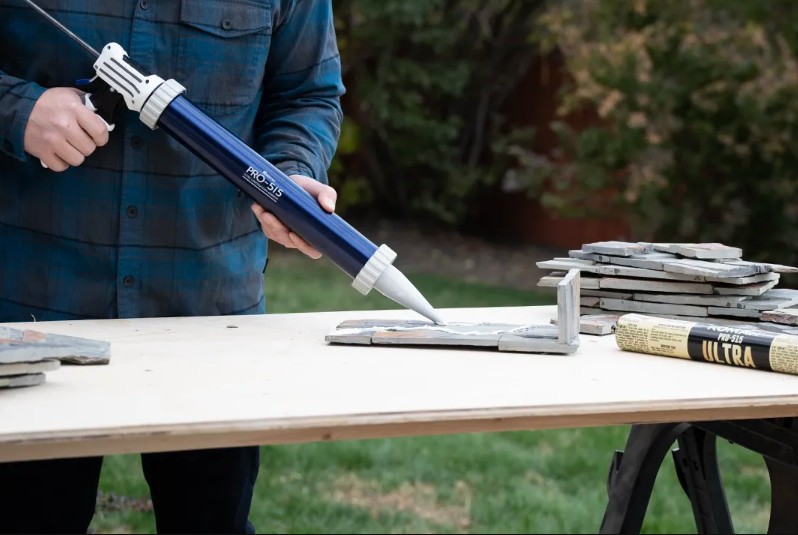
ROMAN PRO-515 Ultra is an MS polymer construction adhesive and sealant formulated to create a strong yet flexible bond. Its waterproof and UV-resistant properties make it suitable for various applications where exposure to moisture and sunlight is a consideration.
Connecting Different Materials More Efficiently
One challenge in prefabricated construction involves connecting elements made from various materials.
For example, a project may involve attaching a rigid decorative panel to a metal framework or securing compatible components made from wood, glass, drywall, or concrete.
Using separate bonding products for every material combination can complicate purchasing and inventory management. A versatile construction adhesive can simplify product selection when its specifications cover the substrates involved.
PRO-515 Ultra is designed for bonding materials including rigid panels, steel, wood, glass, drywall, concrete, and stone.
However, compatibility should never be assumed simply because a product is described as all-purpose. Contractors should review the technical documentation and conduct a small compatibility test before beginning a full installation.
Supporting Cleaner Finishing Details
Architectural details play an important role in the appearance of modular buildings and prefabricated interiors.
Exposed screws and fasteners may not always suit the intended finish, particularly around decorative panels, trim, and selected surface installations.
Adhesive bonding can provide a less visible joining method in suitable applications. It can also reduce the need to drill additional holes into certain components.
Its paintable formulation also offers greater flexibility when the finished installation needs to coordinate with surrounding surfaces.
Considering Moisture and Outdoor Exposure
Material performance becomes especially important when construction components are exposed to outdoor conditions.
Water entering joints can contribute to deterioration, while sunlight and temperature fluctuations may affect the performance of certain bonding materials.
A waterproof adhesive sealant can help protect suitable joints against water intrusion when applied correctly. UV resistance is another useful characteristic for installations exposed to sunlight.
PRO-515 Ultra combines waterproof and UV-resistant properties with a flexible cured bond. These features make it worth considering for compatible interior and exterior construction applications.
Nevertheless, the adhesive should not replace proper flashing, drainage, waterproofing systems, or structural connections where building codes require them.
Getting the Application Process Right
Even a high-performance adhesive depends on proper preparation and application.
Surfaces should be dry, smooth, clean, and structurally sound before bonding. Grease, dust, loose material, and other contaminants can interfere with adhesion.
ROMAN recommends testing the adhesive on a small, inconspicuous area and inspecting the result after 24 hours before proceeding with the complete project.
The product should be applied without dilution, using a suitable manual or pneumatic caulking gun. Its application temperature range is 50°F to 86°F. Contractors should also account for the manufacturer’s stated open time and curing conditions when planning installation schedules.
Following technical instructions helps reduce application problems and supports more consistent results.
Conclusion
As modular construction continues to develop, material compatibility, installation efficiency, and long-term performance will remain important considerations.
An all-purpose heavy-duty construction adhesive can provide a practical bonding option for suitable applications involving multiple substrates and demanding environmental conditions.
ROMAN PRO-515 Ultra brings together high bond strength, flexibility, waterproofing, paintability, and UV resistance in a single-component MS polymer formulation.
For contractors and installers working with modern building components, evaluating these characteristics alongside project specifications can help identify the right bonding solution for a cleaner, more efficient, and dependable installation.