Designing a Home Learning Space That Grows With Your Family
A well-designed learning space can make homework, reading, creative projects, and everyday curiosity feel less like a chore. It does not require a dedicated classroom or an expensive renovation. A spare corner of the living room, a section of a child’s bedroom, or a carefully organized kitchen table can become a place where family members can focus, explore, and create. The most successful home learning areas balance practical storage, comfortable lighting, and enough personality to make people want to spend time there.
Begin With the Way Your Household Actually Lives
Before buying furniture or choosing paint, observe how learning already happens at home. Younger children may need a parent nearby while they draw letters or complete a puzzle. Older children may prefer a quiet surface for independent study. Adults may need a spot for paperwork, online courses, or household planning. A shared space can work beautifully, but it should account for different routines and attention spans.
Think about noise, foot traffic, and the time of day each person uses the area. A desk positioned beside the front door may look convenient, yet it can be distracting during busy afternoons. A corner near the kitchen can be helpful for supervised homework, provided supplies are contained and the work surface is not constantly needed for meals. Good design begins with honest choices about what the room needs to do.
Choose a Location With Light and Breathing Room
Natural light is valuable for reading, drawing, and maintaining a pleasant mood, so a place near a window is often ideal. Position a desk perpendicular to the window where possible. This reduces glare on screens while still allowing daylight to reach the work area. If the desk must face a window, a simple blind or light-filtering curtain gives greater control throughout the day.
Layered artificial lighting matters just as much. Begin with general room lighting, then add a focused task lamp with an adjustable neck. Select a bulb that gives clear, comfortable light rather than a harsh blue cast or a dim yellow glow. For younger children, ensure cords are secured and lamps are stable. A small wall-mounted light can be an excellent alternative where desk space is limited.
Build a Work Surface That Supports Real Tasks
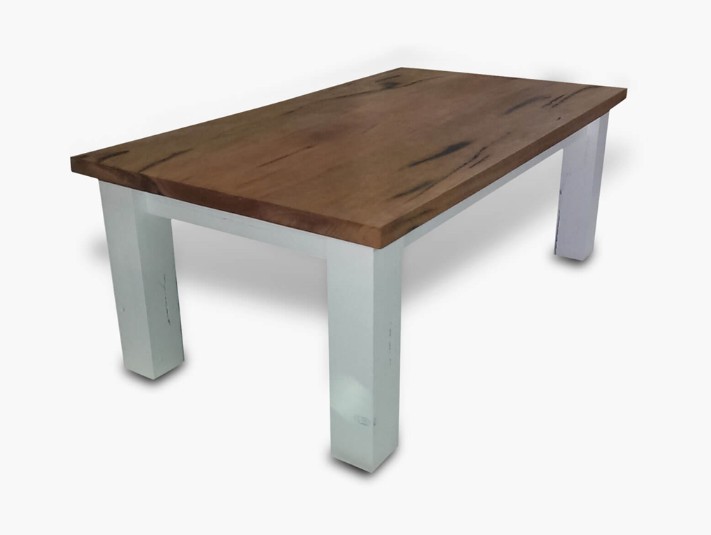
A learning surface should be sized for the activities it will host. A narrow console may suit a laptop and notebook, while art projects, maps, and school books need more room. If several people use the same area, consider a dining-height table with two or more chairs instead of trying to fit multiple desks into a small room. A rolling cart can keep materials close by and move out of the way when the table returns to family use.
Chair comfort deserves attention, especially as children grow. Feet should be supported rather than dangling for long periods; a footrest or sturdy box can help. The worktop should allow elbows to sit comfortably around a right angle. A chair need not look like office furniture to be practical. Upholstered dining chairs, simple wooden chairs with seat cushions, and compact adjustable task chairs can all blend into a home while offering suitable support.
Make Storage Easy Enough to Maintain
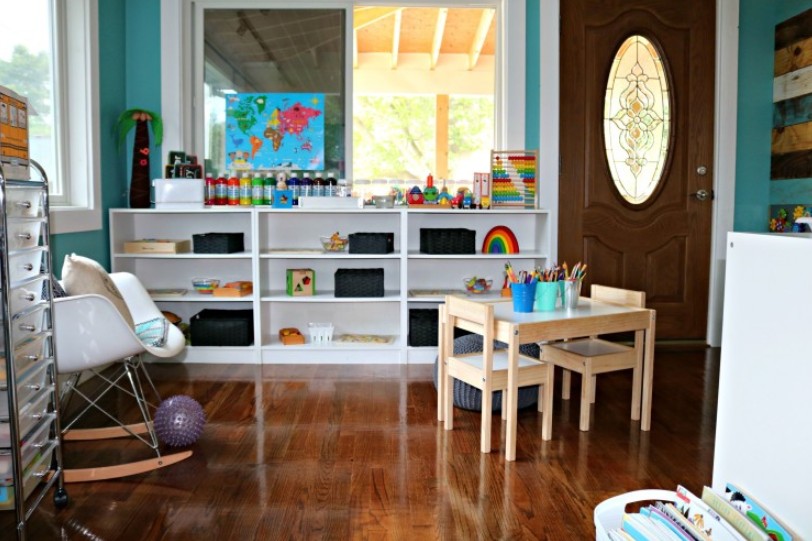
Clutter can quickly turn an inviting workspace into a source of stress. The answer is not to hide every item, but to assign frequently used materials a visible, accessible home. Open bins for pencils, notebooks, glue, and charging cables are useful when clearly labeled. Closed cabinets or lidded boxes are better for craft supplies, extra paper, and visual clutter that can interrupt concentration.
- Keep daily supplies within arm’s reach of the primary work surface.
- Store occasional materials, such as paint or science kits, on a higher shelf or in a nearby cupboard.
- Use one tray or file box for papers awaiting attention, rather than leaving them spread across the desk.
- Choose washable containers and durable finishes for spaces used by children.
A small reset routine makes the system sustainable. At the end of a study session, return pens to their cup, place completed work in its folder, and clear food or drink items. Five minutes of tidying prevents the area from becoming an intimidating pile by the next day.
Include Inspiration Without Creating Distraction
Personal touches transform a functional corner into a meaningful place. A framed family photograph, a child’s artwork, a corkboard for current goals, or a shelf of favorite books can add warmth without overfilling the walls. Try to reserve display space for items that change. Rotating artwork and project notes gives children a sense of ownership and prevents the room from feeling visually stagnant.
Learning also extends beyond assignments. A globe, field guide, small collection of natural objects, or an ongoing family reading list can invite questions. Parents and educators who want to turn those interests into useful writing or classroom resources can also explore education publishing outlets to see the kinds of topics shared across wider learning communities. The key at home is to present inspiration as an invitation, not another demand.
Create Boundaries in a Multipurpose Room
Many homes cannot dedicate an entire room to study, and that is perfectly workable. Visual boundaries help a learning zone feel intentional even within a larger space. A low bookcase can define the edge of a corner while providing storage. A washable rug can separate a reading nook from the rest of a bedroom. In a living room, a folding screen or a wall rail with hooks may help the area transition between study time and relaxation.
Technology needs boundaries as well. Keep chargers in one designated location, use cable clips to prevent tangled wires, and provide a place for headphones. If screens are part of daily learning, balance them with a nearby basket of analog materials: notebooks, colored pencils, reference books, and card games. This makes it easier to shift between digital research and hands-on thinking.
Let the Space Evolve
The best family learning area is not finished once and forgotten. Review it every few months. Is the chair still the right height? Are supplies easy to find? Has the work surface become a dumping ground? Small adjustments—adding a shelf, moving a lamp, replacing an overflowing pencil cup—can restore order before frustration builds.
As needs change, the same corner might move from finger painting to primary-school homework, then to exam preparation or a home office. By prioritizing light, comfort, practical storage, and a little personal character, you can create a flexible space that supports learning at every stage while still feeling like part of a welcoming home.