Luxury Vinyl Plank Flooring Installation: What I Wish I Knew Before My First DIY Floor
Why I Started Installing Luxury Vinyl Plank Flooring
The first time I installed luxury vinyl plank flooring, I was honestly just trying to avoid paying contractor prices. A friend had gotten a flooring quote for a small basement remodel, and the labor cost alone nearly gave both of us a heart attack.
So naturally we thought, “How hard can this be?”
Well… harder than the YouTube videos made it look lol.
I still remember kneeling on a cold concrete floor at almost midnight trying to figure out why the planks suddenly stopped locking together properly halfway across the room. Turns out our first row had drifted slightly crooked. Tiny mistake. Massive headache later.
But after several installs in basements, kitchens, rental homes, and one very chaotic mudroom with two giant dogs running around, I’ll say this: luxury vinyl plank flooring — usually called LVP flooring — is one of the best DIY-friendly flooring options available right now if you take your time.
It’s durable, waterproof, easier to maintain than hardwood flooring, and honestly some modern vinyl plank floors look surprisingly realistic these days. I’ve had visitors ask if certain floors were real oak before.
So if you’re planning a luxury vinyl plank flooring installation, here’s everything I’ve learned from both successful projects and frustrating mistakes.
What Is Luxury Vinyl Plank Flooring?
Why LVP Flooring Became So Popular
Luxury vinyl plank flooring is a synthetic flooring product designed to mimic hardwood flooring while offering:
- Waterproof performance
- Scratch resistance
- Easier maintenance
- Lower cost
Most LVP flooring includes several layers:
- Wear layer
- Decorative image layer
- Core layer
- Backing layer
The better products even include textured wood grain surfaces that feel pretty convincing underfoot.
Honestly, vinyl plank flooring today looks nothing like the shiny fake vinyl floors people remember from decades ago.
Some brands are incredibly realistic now.
Why I Like Luxury Vinyl Plank Flooring for DIY Projects
It’s More Forgiving Than Hardwood
Hardwood flooring installation can get complicated fast.
Luxury vinyl plank flooring is much more beginner friendly.
Reasons DIYers Love It
- Click-lock installation systems
- Waterproof options
- Easy cutting
- Floating floor installation
- Minimal special tools
I’ve seen homeowners install decent-looking LVP floors with almost no previous flooring experience.
That said… the prep work still matters A LOT.
Tools You’ll Need for LVP Flooring Installation
Don’t Overcomplicate It
One thing I appreciate about vinyl plank flooring is you don’t need a giant contractor setup.
Most installs only require:
- Tape measure
- Utility knife
- Rubber mallet
- Tapping block
- Pull bar
- Spacers
- Straight edge
- Jigsaw for tricky cuts
And knee pads.
Seriously, buy knee pads.
I ignored that advice during one full-day install and walked around like an 85-year-old man the next morning.
Not even exaggerating.
Preparing the Subfloor Properly
The Most Important Step Nobody Wants To Do
Every flooring shortcut eventually shows itself.
Luxury vinyl plank flooring is flexible, so whatever is underneath it matters.
Your Subfloor Needs To Be
- Clean
- Dry
- Smooth
- Level
- Structurally solid
I once installed LVP over a slightly uneven plywood floor because the dip “didn’t seem that bad.”
A few months later, certain planks started flexing and clicking underfoot. Drove the homeowner absolutely nuts.
Now I’m borderline obsessive about floor prep.
Can You Install LVP Over Existing Flooring?
Sometimes Yes, Sometimes Absolutely Not
This depends on the condition of the existing floor.
Usually Acceptable
- Smooth tile
- Existing vinyl
- Concrete
- Plywood
Usually Problematic
- Thick carpet
- Loose flooring
- Damaged laminate
- Uneven tile
Deep grout lines under tile can eventually telegraph through thinner planks too.
I’ve seen people skip leveling because they wanted to save time. Regret usually follows later.
Acclimating Luxury Vinyl Plank Flooring
Don’t Skip This Step Like I Did Once
This part feels annoying but matters.
Luxury vinyl plank flooring should acclimate inside the room for:
- At least 24 hours
- Sometimes 48 hours depending on manufacturer instructions
Temperature changes affect expansion and contraction.
I once installed cold planks straight from a garage during winter. Tiny gaps started appearing later after the house warmed up consistently.
Lesson learned.
Planning the Floor Layout
This Part Saves You From Ugly Mistakes Later
Before installing anything, dry-fit several rows first.
Seriously.
Things To Watch For
- Tiny plank pieces near walls
- Awkward seam alignment
- Repeating patterns
- Crooked starting rows
One hallway install taught me how quickly a slightly crooked first row turns into complete chaos halfway across a room.
The floor looked like it was slowly drifting sideways.
Not fun fixing that mistake.
How To Install Luxury Vinyl Plank Flooring
My Step-by-Step Process
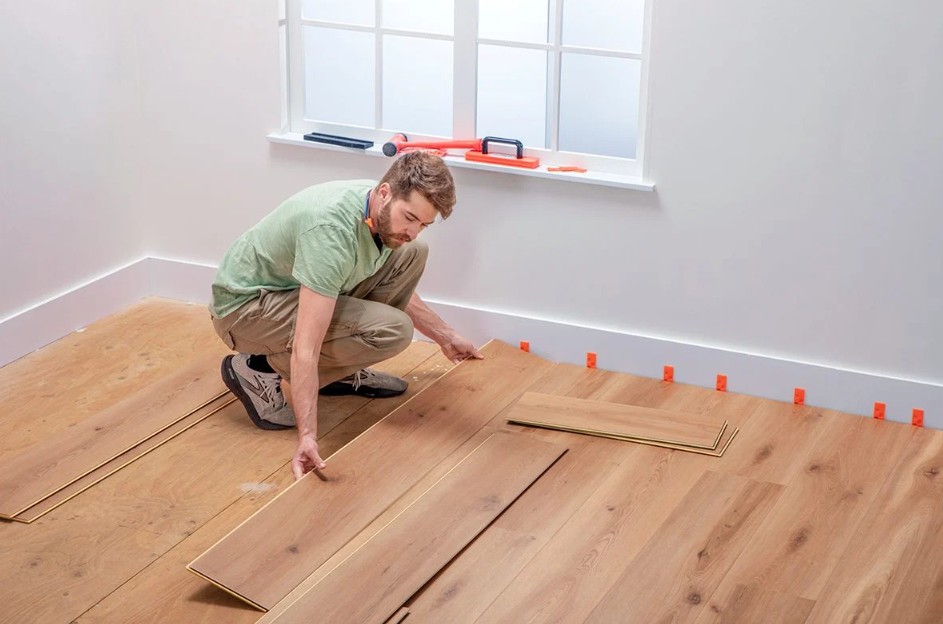
There are different installation systems, but click-lock floating floors are most common now.
Step 1: Start Along the Longest Wall
Usually the straightest wall too.
Use spacers to maintain expansion gaps around the perimeter.
Step 2: Lock the First Row Carefully
The first row determines everything afterward.
Take your time here.
Step 3: Stagger the Seams
Most manufacturers recommend staggered joints around:
- 6 inches minimum
- Sometimes more
This improves both appearance and strength.
Random staggering looks far more natural than obvious repeating patterns.
Step 4: Continue Row by Row
Angle planks together and lock them carefully.
Don’t force them aggressively.
I cracked several locking edges early on by getting impatient. Those weak connections eventually separate later.
Step 5: Cut Around Obstacles
Door jambs, vents, cabinets, and toilets require careful cuts.
A jigsaw helps tremendously here.
For weird shapes, I still sometimes make cardboard templates like an old-school carpenter.
Works better than wasting expensive planks honestly.
Common Problems During Installation
Stuff That Goes Wrong All the Time
Even experienced installers run into problems occasionally.
Gaps Between Planks
Usually caused by:
- Uneven subfloor
- Damaged locking systems
- Poor installation angle
Hollow Sounds
Often happens when subfloors aren’t level enough.
Peaking or Buckling
Usually from missing expansion gaps.
Pattern Repetition
Cheap flooring sometimes repeats identical wood patterns too often.
Once you notice repeated planks, you can’t unsee them lol.
Cutting Luxury Vinyl Plank Flooring
Easier Than Most People Think
This part scared me initially but turned out pretty manageable.
Straight Cuts
Usually done by:
- Scoring with utility knife
- Snapping the plank cleanly
Curved Cuts
Use:
- Jigsaw
- Oscillating tool
- Tin snips occasionally
Sharp blades matter big time.
Dull blades tear vinyl instead of cutting cleanly.
Best Rooms for Luxury Vinyl Plank Flooring
Where It Performs Really Well
LVP flooring shines in busy practical spaces.
Kitchens
Waterproof protection helps around sinks and spills.
Basements
Huge advantage over hardwood here.
Laundry Rooms
Handles moisture better than laminate flooring.
Living Rooms
Modern wood-look styles work surprisingly well.
Rental Properties
Durable and easier to replace than hardwood.
Honestly, I think vinyl plank flooring makes the most sense in homes where people actually live hard on their floors.
Kids, pets, muddy shoes, spilled drinks… all that stuff.
Luxury Vinyl Plank Flooring vs Hardwood
My Honest Opinion After Installing Both
Nothing fully replaces real hardwood flooring visually.
But hardwood comes with:
- Higher cost
- Water sensitivity
- Refinishing needs
- Easier scratching
Luxury vinyl plank flooring gives homeowners:
- Waterproof durability
- Easier maintenance
- Lower installation cost
One homeowner told me she stopped stressing about her dog’s water bowl after switching from hardwood to LVP.
That peace of mind matters more than people think.
Cleaning and Maintaining LVP Flooring
Easier Than Hardwood by Far
This is honestly one of the biggest advantages.
Most LVP floors only need:
- Sweeping
- Vacuuming
- Damp mopping
No sanding. No refinishing.
I do recommend:
- Felt pads under furniture
- Rugs near entrances
- Cleaning grit quickly
Tiny sand particles slowly wear down flooring surfaces over time.
How Long Does Luxury Vinyl Plank Flooring Last?
Depends Heavily on Quality
Not all LVP flooring is equal.
Cheap flooring may last:
- 5 to 8 years
Better luxury vinyl plank flooring often lasts:
- 15 to 25 years
Wear layer thickness matters A LOT.
Typical Wear Layers
- 6 mil = light residential
- 12 mil = decent residential
- 20 mil+ = heavy traffic
Personally, I wouldn’t install ultra-thin bargain flooring in busy homes anymore.
I’ve seen too many failures.
Mistakes I’d Avoid Next Time
Stuff I Learned the Hard Way
Rushing Floor Prep
Always comes back later.
Buying Cheap Flooring
Thin planks feel cheap fast.
Ignoring Expansion Gaps
Buckling repairs are miserable.
Installing Without Planning Layout
Bad seam patterns ruin the look.
Using Dull Blades
Makes ugly cuts immediately.
Honestly, patience matters more than skill with flooring installation sometimes.
Is Luxury Vinyl Plank Flooring Worth It?
My Real-World Thoughts
For most homeowners today? Absolutely.
Especially if you want:
- Waterproof flooring
- Affordable installation
- Modern wood appearance
- DIY-friendly installation
- Easy maintenance
Would I choose it over hardwood everywhere? Probably not.
But for:
- Basements
- Kitchens
- Rental homes
- Busy family spaces
Luxury vinyl plank flooring makes a ton of practical sense.
And modern products really have improved tremendously compared to older vinyl flooring generations.
Conclusion
Luxury vinyl plank flooring installation is one of the most manageable DIY flooring projects for homeowners willing to take their time and focus on preparation. While the click-lock systems make installation easier than traditional hardwood flooring, the real success usually comes down to careful planning, smooth subfloors, proper expansion gaps, and patience during layout.
I’ve seen beautiful LVP installations that lasted for years, and I’ve also seen rushed projects fail because someone skipped basic prep work or bought ultra-cheap flooring. The good news is that modern luxury vinyl plank flooring offers a combination of durability, waterproof protection, realistic wood visuals, and low maintenance that works incredibly well for everyday homes.
For busy households with kids, pets, spills, and heavy foot traffic, it’s honestly one of the best flooring options available right now.
FAQ About Luxury Vinyl Plank Flooring Installation
What is luxury vinyl plank flooring?
Luxury vinyl plank flooring, often called LVP flooring, is a synthetic flooring product designed to look like hardwood while offering waterproof durability and easier maintenance.
Is luxury vinyl plank flooring waterproof?
Most modern LVP flooring products are waterproof or highly water resistant, making them popular for kitchens, basements, bathrooms, and laundry rooms.
Can beginners install luxury vinyl plank flooring?
Yes. Click-lock luxury vinyl plank flooring is considered one of the easiest flooring types for DIY homeowners to install.
Do you need underlayment for LVP flooring?
Some products include attached underlayment, while others require separate underlayment depending on the subfloor and manufacturer instructions.
How long should vinyl plank flooring acclimate before installation?
Most manufacturers recommend acclimating flooring for at least 24 to 48 hours inside the room before installation.
Can luxury vinyl plank flooring be installed over tile?
Yes, in many cases. The tile surface should be smooth, level, and stable. Deep grout lines may need leveling compound first.
What thickness is best for luxury vinyl plank flooring?
For most homes, flooring around 5mm to 8mm thick with at least a 12 mil wear layer provides good durability.
How long does luxury vinyl plank flooring last?
Quality LVP flooring can last 15 to 25 years depending on wear layer thickness, traffic levels, and maintenance.
Does luxury vinyl plank flooring scratch easily?
Higher-quality products resist scratches fairly well, but sharp objects, pet nails, and heavy furniture can still cause damage over time.
What is the biggest mistake when installing vinyl plank flooring?
Poor subfloor preparation is probably the most common issue. Uneven or dirty surfaces can lead to gaps, flexing, and long-term flooring problems.