

Key Takeaways
- Monsoon rain can flood outdoor hiding places, create standing water, and change how pests move around a Greater Phoenix property.
- Scorpions, cockroaches, ants, termites, mosquitoes, crickets, and rodents may be more noticeable after a heavy storm.
- Fast cleanup, moisture control, and sealing small entry gaps can reduce the chances of pests settling indoors.
- A single sighting may be temporary, but repeated activity often points to a shelter, food, moisture, or access issue that needs attention.
For homeowners dealing with recurring storm-related activity, comparing Phoenix exterminators can be a practical next step. Green Mango Pest Control provides residential and commercial pest control services for the Greater Phoenix and Valley area, including help with scorpions, termites, mosquitoes, rodents, roaches, ants, spiders, and other common Arizona pests. Its local focus makes it a relevant option when monsoon conditions keep bringing pests back around the home.
In Greater Phoenix, a summer storm can transform a dry yard in a matter of minutes. Water collects along block walls, beneath patio furniture, inside irrigation boxes, and in forgotten containers. Some pests become more active outdoors after rain, while others leave soaked soil, landscape debris, or drainage areas in search of drier shelter.
Why Monsoon Storms Change Pest Activity
Arizona monsoon weather combines rain, heat, humidity, and sudden changes in soil moisture. Those conditions can support insect activity and temporarily disrupt the places where pests usually hide. Rain may fill low spots, wash debris into corners, encourage new plant growth, and saturate burrows or cracks near foundations.
That does not mean every insect seen after a storm is entering the house. Many pests simply become easier to spot on patios, walls, driveways, and sidewalks. Still, doors, garages, utility penetrations, and shaded exterior storage areas can become convenient routes indoors. The University of Arizona notes that monsoon weather can bring pests to life or force them inside, which is why a prompt inspection is worthwhile after a major downpour.
The Main Pests To Watch After Heavy Rain
Scorpions
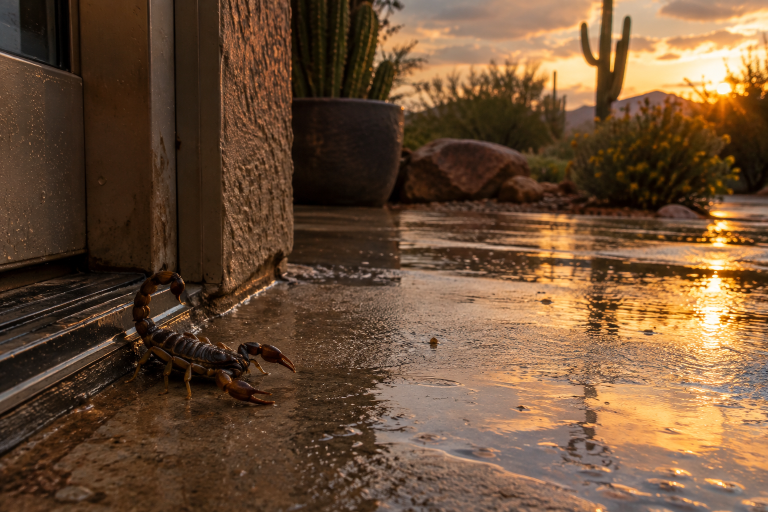
Scorpions may leave flooded or disturbed harborages and travel along exterior walls, patios, garages, and door thresholds. The Arizona bark scorpion deserves particular caution because it can climb rough surfaces and fit through small openings. Shake out shoes and gloves left outside, reduce clutter near the home, and make sure exterior door sweeps sit close to the threshold.
Cockroaches
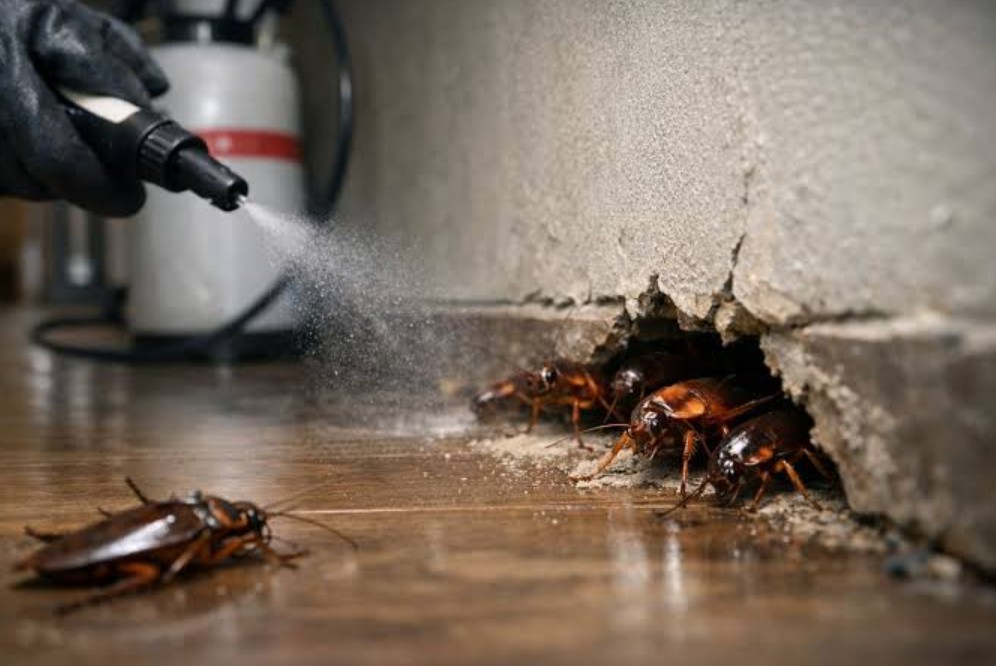
Large outdoor cockroaches can appear after rain near bathrooms, laundry rooms, garages, floor drains, and plumbing areas. One roach indoors does not automatically mean there is a kitchen infestation. Repeated sightings, droppings, egg cases, or activity in the same room are stronger reasons to investigate drains, gaps, food debris, and moisture sources.
Ants and Termites
Rain can alter ant foraging routes, causing trails to appear around doors, windows, and kitchens. Winged ants and termites may also be visible during the reproductive period. Discarded wings, mud tubes, damaged wood, or recurring winged insects near the home warrant a closer look. A brief swarm can be seasonal, but evidence connected to the structure should not be ignored.
Mosquitoes
Mosquitoes need standing water to develop, and even small containers can become a problem after a storm. Check plant saucers, buckets, toys, tarps, pool covers, clogged gutters, bird baths, and low areas in the yard. A weekly tip-and-toss routine is especially useful during the monsoon season.
A 24-Hour Post-Storm Home Check
- Walk the exterior in daylight and look along the foundation, patio edges, gates, and block walls.
- Empty water from pots, toys, buckets, tarps, and other outdoor containers.
- Check gutters, drains, pool covers, irrigation boxes, and areas where water collected.
- Look for fresh ant trails or pest movement near windows, doors, plumbing lines, and garage thresholds.
- Inspect shaded storage areas, woodpiles, boxes, rocks, and dense landscaping near the structure.
- Keep children and pets away from unfamiliar insects, scorpions, nests, and other wildlife.
How To Seal Common Pest Entry Points
Exclusion is one of the most useful ways to make a home less accessible after wet weather. Inspect weatherstripping on exterior and garage doors, repair torn screens, and seal visible gaps around utility lines and plumbing penetrations. Check vents and wall joints for openings that need appropriate screening or repair.
Outside, trim branches and plants away from the roofline and exterior walls where practical. Move stored materials, firewood, cardboard, and landscape clutter away from the foundation. These changes reduce the shaded, protected spaces that pests may use as temporary shelter.
Use Integrated Pest Management at Home
Integrated pest management is a prevention-first approach, not a single product or one-time spray. Start by identifying what you are seeing and where it is appearing. Then correct the conditions that support the pest, such as standing water, food residue, clutter, or an unsealed entry point.
Monitoring matters because a single pest does not always require the same response as repeated activity. Use practical steps first, including sanitation, moisture control, exclusion, and, where appropriate, traps. If treatment is necessary, it should be targeted to the pest and location rather than used as a substitute for correcting the underlying conditions.
When a Professional Inspection Makes Sense
Cleanup alone may not resolve repeated indoor scorpions, persistent roach sightings, termite evidence, rodent noises, or heavy mosquito activity. A useful inspection should identify the pest, review likely entry points, check moisture and drainage conditions, and examine the areas around the home where pests may be sheltering.
Common Questions About Monsoon Pests
Do pests always come inside after a storm?
No. Some pests move toward sheltered indoor spaces, while others are simply more visible outside because rain has changed their usual hiding places.
How soon should standing water be removed?
Remove it as soon as it is safe to do so. Prioritize small containers, plant saucers, toys, pool covers, and other places that can hold water.
Does one scorpion mean there are more?
Not necessarily. However, repeated sightings can suggest nearby shelter, available prey, or an entry gap that should be addressed.
Can store-bought sprays solve a monsoon pest problem?
They may affect visible pests, but they will not correct standing water, food sources, shelter, or gaps that allow pests to return.
A Simple Seasonal Plan for Greater Phoenix Homes
- Before storms: Clean gutters, repair screens, check door seals, and reduce yard clutter.
- After storms: Drain standing water, inspect likely entry points, and check for new trails or pest movement.
- During the following week: Monitor garages, patios, kitchens, bathrooms, and shaded exterior walls.
- After repeated activity: Schedule an inspection and request recommendations based on the conditions around the property.
Conclusion
Monsoon pests are often drawn to moisture, shelter, food, and access—not poor housekeeping. A careful post-storm inspection can catch small issues before they become recurring problems. By clearing standing water, sealing gaps, reducing outdoor shelter, and monitoring changes around the property, Greater Phoenix homeowners can make their homes less inviting to pests.