What Airflow Design Makes an Industrial Paint Booth Most Effective
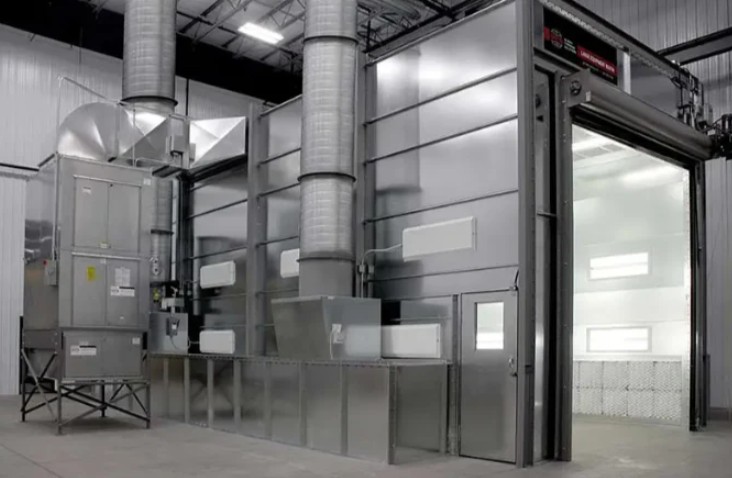
Achieving a smooth, flawless paint job begins well before the first spray touches the surface. In an industrial paint booth, the science of airflow determines whether coatings settle evenly or dust particles ruin the finish. The right combination of pressure balance, ventilation, and direction transforms an ordinary workspace into a controlled finishing environment capable of professional-grade results.
Crossdraft Movement and Its Role in Paint Consistency
Crossdraft airflow moves air horizontally from one end of the industrial paint booth to the other, guiding particles across the surface being coated. This pattern allows fresh air to sweep directly over the work area, pushing contaminants away from the painter and the product. It’s an efficient system for facilities with limited space or lower ceiling heights.
Because the air travels in a straight line, paint is carried evenly across the surface, but balance is essential. If the air enters too forcefully, overspray and uneven coating can result. Technicians often pair crossdraft systems with powder coating equipment designed to control spray volume, ensuring a consistent finish across multiple parts or vehicle panels.
Downdraft Flow Patterns That Control Overspray Effectively
In high-production environments, downdraft airflow delivers superior control by pulling air downward through floor grates. This design moves airborne paint mist away from the item immediately after application, reducing the risk of defects caused by particles settling back on wet surfaces. The downward pull keeps the workspace visibly clearer and safer for operators.
This type of system is often integrated into large-scale powder coating booth setups. The even downward draw reduces turbulence and helps maintain a clean finish on complex shapes. Because air is filtered and exhausted below the work zone, downdraft designs are highly valued for their ability to produce show-quality coatings on cars, machinery, and heavy equipment parts.
The Impact of Uniform Air Distribution on Finish Quality
An industrial paint booth’s performance depends on how evenly air moves through every section. Poorly balanced airflow can cause temperature variations, uneven paint thickness, or trapped solvents. Uniform air distribution ensures that no area becomes stagnant or overloaded with overspray, leading to smoother and more predictable results.
High-performance systems often include diffuser panels or adjustable plenums that balance airflow from inlet to outlet. This level of control becomes essential when using powder coating equipment where consistent air pressure prevents the powder from clumping or drifting. By maintaining equal air velocity, the booth guarantees a uniform coating even during extended production runs.
Exhaust Placement That Keeps Work Zones Clear and Stable
Exhaust placement defines how efficiently contaminated air leaves the booth. Positioned incorrectly, exhaust vents can create turbulence or dead zones where airborne particles swirl unpredictably. In an industrial paint booth, exhaust systems are typically aligned with the natural path of airflow to pull contaminants away from the freshly painted item.
Floor-mounted exhausts are common in downdraft booths, while wall or rear exhausts support crossdraft systems. The goal is consistent removal without disrupting the laminar flow of clean air entering the booth. By optimizing exhaust placement, operators maintain a stable air environment that preserves coating uniformity and reduces rework caused by airborne debris.
How Recirculated Airflow Affects Temperature Uniformity
Recirculated airflow systems reuse a portion of filtered air to maintain steady temperatures throughout the booth. This feature plays an essential role in coating adhesion and curing efficiency. Stable temperature prevents uneven drying, which can lead to variations in gloss or color tone.
Industrial booths paired with powder coating equipment often rely on recirculation to control heating costs while maintaining consistent curing temperatures. However, filtration quality must remain high to prevent contamination. Properly designed systems ensure that the recycled air is fully purified before re-entering the workspace, keeping both energy use and environmental impact under control.
Pressure Control Strategies That Maintain Booth Efficiency
Pressure balance inside an industrial paint booth determines how air moves through openings and across surfaces. A slightly positive pressure prevents dust from entering the booth, while negative pressure ensures proper exhaust of contaminants. Achieving this balance requires precision calibration between intake fans and exhaust systems.
Uncontrolled pressure differences can pull unfiltered air into the workspace or cause airflow instability around painted surfaces. Experienced technicians monitor manometers or digital pressure gauges to maintain optimal performance. In facilities using a powder coating booth, pressure control prevents powder drift and supports cleaner transitions between coating cycles.
Ceiling and Floor Vent Alignment for Streamlined Air Exchange
The placement of vents in the ceiling and floor influences how efficiently air circulates. Proper alignment allows for a smooth, vertical air path that removes contaminants without disturbing the paint layer. Industrial paint booth engineers design vent layouts based on the size of the space, airflow rate, and type of coating being used.
Misaligned vents can cause eddies or dead spots, where air swirls instead of flowing smoothly. In advanced powder coating booth designs, vents are calibrated to maintain laminar flow that moves evenly from top to bottom. This alignment supports consistent coating deposition and prevents trapped solvents or powder accumulation on surfaces.
Air Velocity Settings That Support Consistent Film Application
Air velocity defines how fast air travels through the booth, influencing both paint transfer and safety. Too little velocity allows overspray to linger; too much disturbs the paint’s trajectory. Industrial paint booth operators carefully set velocity levels to create a controlled environment where coatings adhere evenly to surfaces. Ideal velocity depends on the coating type and equipment used. Powder coating equipment typically requires steady, moderate airflow that supports particle suspension without turbulence. With proper calibration, air velocity ensures even film build, smooth texture, and efficient overspray capture—making the booth not only effective but also energy-conscious in continuous operation.