Why Wallpaper Murals Are the Easiest Way to Make a Room Feel Completely Different
I painted my living room three times in two years. Each time, the result was fine. Clean, even, perfectly acceptable. And each time, about four months in, I’d look at the walls and think: this is just a colour. That flat, same-everywhere feeling never quite went away. Then a friend installed a floor-to-ceiling forest scene in her dining room, and I finally understood what wallpaper murals actually do that paint can’t.
They give a wall depth. Not in a decorating-magazine, abstract sense. I mean you walk into the room and your eye goes somewhere. There’s a foreground and a background. It changes how the space feels without moving a single piece of furniture.
What Makes Wallpaper Murals Different from Regular Wallpaper?
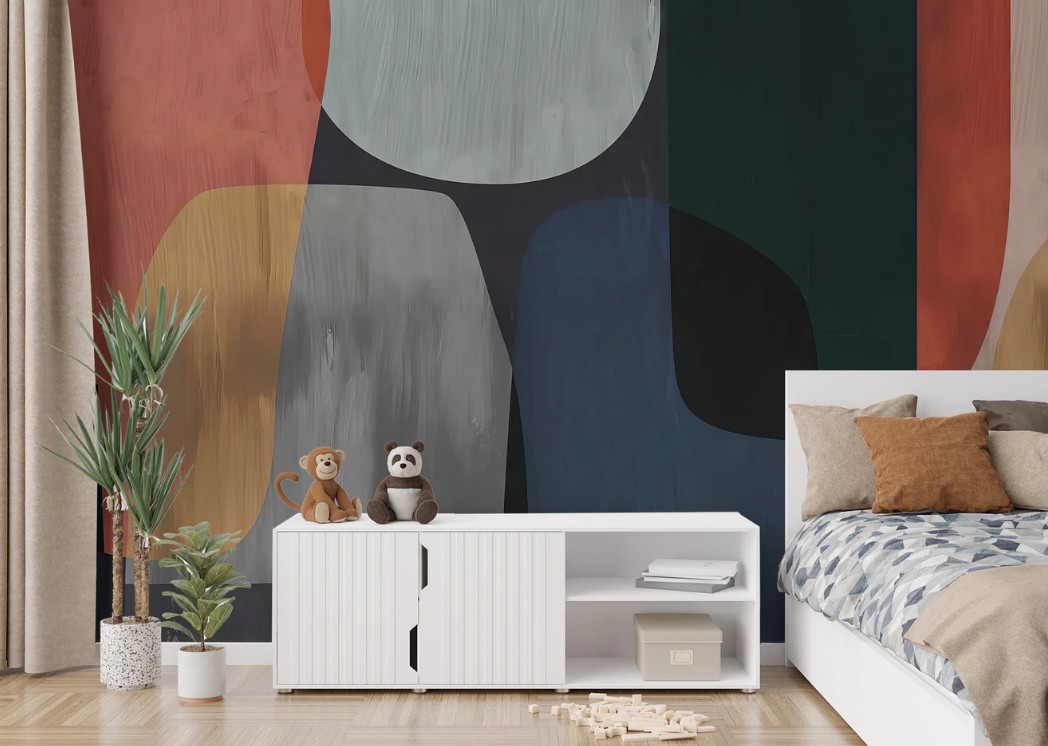
Standard wallpaper repeats a pattern. Stripes, florals, geometric tiles they loop every few inches. A wall mural doesn’t repeat. It’s one continuous image spread across a wall, sometimes spanning three or four panels that line up edge to edge. The distinction matters because it changes the visual effect entirely.
Repeating patterns work well in small doses. A powder room, an accent wall behind open shelving. But when you want a room to feel like it has a view a mountain range, an abstract watercolour wash, a city skyline at dusk you need something that behaves more like a photograph than a textile. That’s where mural wallpaper comes in. One image, one wall, no repeat.
Where Do Wallpaper Murals Work Best?
Bedrooms and living rooms get the most attention, and for good reason. A mural behind the bed gives the whole room an anchor point. In living rooms, a large-scale scene behind the sofa pulls the seating area together in a way a gallery wall of framed prints rarely manages.
But mural wallpaper for rooms like home offices, nurseries, and even hallways is picking up fast. A long corridor with a panoramic landscape mural? It stops feeling like a hallway and starts feeling like a gallery. Kids’ rooms are another obvious fit think jungle canopies, underwater scenes, or outer space themes that grow with the child longer than you’d expect.
Dining rooms are underrated, too. A botanical mural behind a wooden table creates a mood that wallpaper or paint alone won’t match. The trick is choosing a design with enough visual weight to anchor the room but not so much detail that it competes with everything on the table.
Peel-and-Stick vs. Paste-the-Wall: Which One Should You Pick?
This is the question that trips most people up. Paste-the-wall murals use traditional adhesive. They stick hard, last long, and handle humidity better. If you’re covering a wall in a room you don’t plan to change for five-plus years, paste is the safer bet.
Peel and stick wallpaper murals, on the other hand, are removable. You line up the panels, smooth them onto the wall, and when you’re done with the look or moving out of a rental you peel them off without damaging the surface. The adhesive has improved a lot over the past few years. Early versions had a habit of curling at the edges; current products hold firm on properly prepped walls.
For renters, peel-and-stick is a no-brainer. For homeowners who like to redecorate every couple of years, same thing. If you’re after something permanent and you live in a humid climate, paste-the-wall is the better call.
How to Choose the Right Mural Without Regretting It
The biggest mistake I see people make: picking a mural based on a zoomed-in product photo without thinking about how it’ll look at actual room scale. A delicate watercolour flower that looks gorgeous on a laptop screen can wash out completely on a 3-metre wall. A bold geometric design that seems exciting in a small swatch can feel overwhelming at full size.
Here’s what works. Measure your wall first height and width, in centimetres if the supplier asks for it. Most good wallpaper for walls suppliers offer custom sizing so the mural fits your exact dimensions without awkward cropping or blank edges.
Think about what else is in the room. A busy mural fights with patterned curtains and a patterned rug. If the mural is the statement, everything else should be quiet. Solid-coloured soft furnishings, simple frames, neutral flooring. Let the wall do the talking.
Lighting matters more than most people realise. A mural on a wall that catches direct afternoon sun will look completely different from one on a north-facing wall. Warm-toned murals terracotta, gold, sunset palettes can feel too hot under bright light. Cool-toned designs hold up better in sunny rooms.
Installation Tips That Save You a Headache
You don’t need to hire a professional, but you do need patience. Most wallpaper murals arrive as numbered panels. Start from the centre of the wall and work outward it keeps the main image centred and pushes any trimming to the less visible edges.
Use a wallpaper smoother, not your hands. Air bubbles are easier to push out when you work from the middle of each panel toward the edges. And if a bubble does get trapped, a tiny pinprick with a needle and a gentle press fixes it without leaving a mark.
One thing that caught me off guard: wall prep. If there’s old flaking paint, moisture damage, or uneven texture, the mural will show every flaw. A light sand and a coat of lining paper on rough walls makes a real difference to the finished result.
Are Wallpaper Murals a Passing Trend?
Murals on walls have been around since Pompeii. The modern printed version has been commercially available since the 1970s. What’s changed recently is accessibility and quality digital printing now produces photographic-grade detail at prices that make sense for a normal household budget. Custom sizing, a wider range of designs, and the arrival of peel-and-stick options have all helped.
I don’t think this is a fad. Wallpaper murals solve a real problem how to give a room personality and depth without expensive structural changes. As long as people want their spaces to feel like more than four painted boxes, wall murals have a place.
Frequently Asked Questions
Can wallpaper murals be used in bathrooms and kitchens?
Yes, but material choice matters. Paste-the-wall murals with a water-resistant coating handle bathroom humidity well. I’ve installed murals in two bathrooms myself one held up for three years with zero peeling. Avoid peel-and-stick in rooms with heavy steam, though. The moisture loosens the adhesive over time and you’ll end up re-pressing edges every few weeks.
How long do wallpaper murals typically last?
Paste-the-wall murals last 10 to 15 years in most rooms, sometimes longer if they’re away from direct sunlight. Peel-and-stick versions hold well for 3 to 5 years, depending on wall texture and room conditions. Fading is the main issue with either type south-facing walls take the hardest hit. A UV-protective finish helps, and some suppliers offer it as a standard feature.
Do I need to hire a professional to install a wall mural?
Not necessarily. Most wallpaper murals ship as pre-numbered panels with overlap guides, so the alignment is largely done for you. If your wall is flat and properly prepped, a patient DIYer can handle it in a couple of hours. Where I’d recommend a pro: very tall walls above 3 metres, stairwells, or textured surfaces like brick. Those jobs get tricky fast.
If you’re thinking about trying a mural for the first time, start small. A feature wall in a bedroom or a hallway accent. You’ll know within a week whether you want to do the rest of the house. Most people do.
About the Author
Denny is a wallpaper mural designer and expert with over a decade of hands-on experience in residential and commercial wall decor. He has designed and installed hundreds of custom mural wallpaper projects across living rooms, bedrooms, offices, and hospitality spaces. When he’s not matching colour palettes to room lighting, Denny writes about practical interior design for homeowners who want real results without the decorator price tag.